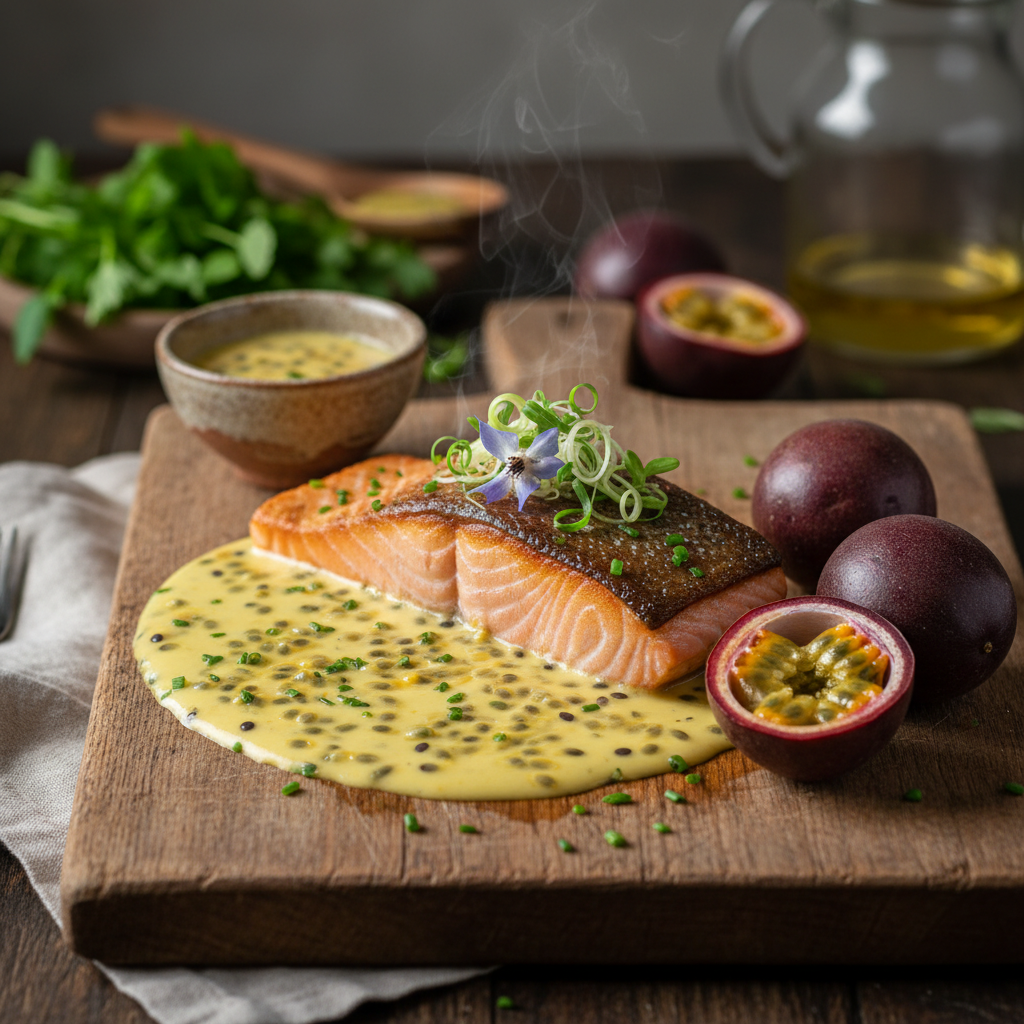
The Allure of Salmon in Cold Passion Fruit Sauce
The culinary world is a fascinating playground of flavors, textures, and temperatures. Among the myriad combinations, one that truly captivates the palate and challenges traditional perceptions is salmon served in a cold passion fruit sauce. This seemingly unconventional pairing is, in fact, a testament to the art of balancing contrasts, creating a dish that is at once refreshing, elegant, and deeply satisfying. Beyond its surprising deliciousness, this dish offers a unique interplay of omega-3 richness with tropical zest, making it a healthy and exciting option for various occasions.
Salmon, renowned for its rich, buttery texture and distinct flavor, is a staple in healthy eating. It’s packed with essential omega-3 fatty acids, high-quality protein, and numerous vitamins and minerals. Often served hot, grilled, pan-seared, or baked, its familiar warmth is a comfort. However, when paired with a vibrant, chilled passion fruit sauce, the salmon takes on an entirely new character. The cold temperature of the sauce, bursting with the exotic tang and slight sweetness of passion fruit, acts as a brilliant counterpoint to the inherent richness of the fish. This creates a fascinating dance on the tongue, where each element highlights and elevates the other, rather than competing.
The magic of this dish lies in its versatility. It can be a stunning appetizer, a light and refreshing main course, or even an impressive dish for a summer brunch. The visual appeal is undeniable – the vibrant orange of the salmon contrasting beautifully with the sunny yellow of the passion fruit sauce, often flecked with the fruit’s characteristic black seeds. It’s a dish that invites curiosity and rewards adventurous palates.
Crafting the Perfect Cold Passion Fruit Sauce
The heart of this dish is undoubtedly the cold passion fruit sauce. Achieving the perfect balance requires attention to detail and an understanding of the fruit’s unique profile. Passion fruit is known for its intense aroma, tartness, and a subtle underlying sweetness. When creating a cold sauce, these characteristics need to be harnessed without overwhelming the delicate flavor of the salmon.
Start with ripe passion fruit. A good indicator of ripeness is a slightly wrinkled skin and a noticeable weight for its size. Fresh passion fruit pulp is always preferred over concentrates for its superior flavor and aroma. Once the pulp is extracted, the real artistry begins. The sauce shouldn’t be overly sweet, as that would mask the salmon’s natural taste. A touch of natural sweetener, such as honey or agave nectar, can be added judiciously to balance the tartness, but always taste as you go.
To achieve a creamy, emulsified texture without relying on heavy dairy, many chefs turn to healthy fats and aromatics. A high-quality extra virgin olive oil can provide a silky mouthfeel and a subtle peppery note that complements the fruit. For an extra layer of complexity, finely minced shallots or a hint of fresh ginger can be incorporated. These add a gentle warmth and aromatic depth that prevents the sauce from becoming one-dimensional. A squeeze of lime juice further brightens the flavors, enhancing the overall acidity and freshness. Fresh herbs, such as mint or cilantro, finely chopped, can also introduce a refreshing herbaceous note that marries well with both the fish and the fruit.
The chilling process is crucial. The sauce must be thoroughly chilled before serving to achieve the desired temperature contrast. This allows the flavors to meld and deepen, resulting in a more cohesive and refreshing experience. Consider making the sauce an hour or two in advance and storing it in the refrigerator to ensure it reaches its optimal coolness.
Preparing the Salmon for a Cold Pairing
While the sauce steals the show in terms of flavor surprise, the salmon preparation is equally vital for a harmonious dish. Since the sauce is cold, the salmon itself needs to be cooked in a way that allows its texture and flavor to shine, even when it’s not served piping hot. The goal is to achieve a flaky, moist texture that melts in the mouth, without being dry or overcooked.
Pan-searing or baking are excellent methods for preparing salmon for this dish. For pan-searing, aim for a beautifully crisp skin and a medium-rare to medium interior. This ensures the salmon remains succulent and tender. Season the salmon simply with salt and freshly ground black pepper to allow its natural flavors to come through. The searing process also creates a lovely contrast in texture with the smooth sauce.
If baking, a lower temperature and shorter cooking time will yield a more delicate, steamed-like texture. Wrapping the salmon in parchment paper with a few aromatics like lemon slices or fresh dill can also infuse it with subtle flavors while keeping it moist. The key is not to overcook the salmon, as a dry piece of fish will detract from the overall experience, regardless of how good the sauce is.
Once cooked, the salmon should be allowed to rest for a few minutes before being portioned. While some recipes suggest serving the salmon at room temperature, a slightly warm or even chilled salmon can work exceptionally well with the cold sauce. The choice often depends on personal preference and the desired thermal contrast. If serving chilled, allow the cooked salmon to cool completely and then refrigerate it for a short period before plating.
Plating and Accompaniments: Elevating the Experience
The presentation of salmon in cold passion fruit sauce is almost as important as its taste. The vibrant colors naturally lend themselves to a visually stunning dish. Consider using a stark white plate to make the colors pop. Arrange the salmon elegantly, perhaps as a fillet or flaked into smaller pieces, and then generously spoon the cold passion fruit sauce over and around it. A light drizzle of olive oil or a sprinkle of fresh microgreens can add a professional touch.
When it comes to accompaniments, simplicity is key. The dish itself is quite rich in flavor and texture, so avoid anything that would compete or overwhelm. Light, refreshing side dishes work best. A bed of fluffy quinoa or couscous can provide a neutral base to absorb the sauce. A simple green salad with a light vinaigrette offers a pleasant crunch and freshness. Roasted asparagus or blanched green beans can add a touch of earthy sweetness and vibrant color without being too heavy.
For those who enjoy a little extra texture, toasted nuts like slivered almonds or macadamia nuts can be sprinkled over the top. The subtle crunch and nutty flavor can provide another layer of complexity. Edible flowers, such as nasturtiums or pansies, can also be used for a beautiful garnish, adding a touch of elegance and visual interest.
Pairing this dish with beverages also requires thought. A crisp, dry white wine, such as Sauvignon Blanc or Pinot Grigio, would beautifully complement the acidity of the passion fruit and the richness of the salmon. For non-alcoholic options, sparkling water with a hint of lime or a chilled herbal tea would be equally refreshing. The goal is to choose a beverage that cleanses the palate and allows the unique flavors of the dish to shine.
Beyond the Recipe: Customization and Inspiration
The beauty of “Salmon in Cold Passion Fruit Sauce” lies in its adaptability. Once you master the basic principles, you can begin to experiment and personalize the dish to your taste. Consider adding a hint of chili or a pinch of cayenne pepper to the passion fruit sauce for a subtle kick, introducing a sweet-and-spicy dimension. A dash of coconut milk can also be incorporated into the sauce for a creamier, more tropical profile, creating a fusion of Thai and South American flavors.
Different types of salmon can also be explored. While Atlantic salmon is commonly used, sockeye or coho salmon, with their firmer textures and distinct flavors, could offer interesting variations. For those who prefer white fish, flaky cod or halibut could also be an intriguing substitute, though the richness of salmon truly complements the passion fruit in a unique way.
This dish also serves as an excellent inspiration for other cold fish preparations. Imagine seared tuna with a cold mango-lime sauce or grilled scallops with a chilled roasted red pepper and cilantro vinaigrette. The concept of temperature contrast and balancing rich proteins with vibrant, acidic sauces is a fundamental principle that can be applied across a wide spectrum of culinary creations.
In conclusion, salmon in cold passion fruit sauce is more than just a recipe; it’s a culinary experience that challenges expectations and delights the senses. It’s a testament to the fact that sometimes, the most surprising combinations yield the most extraordinary results. This dish is a celebration of fresh ingredients, thoughtful preparation, and the endless possibilities that arise when we dare to step outside traditional culinary boundaries. It offers a refreshing, healthy, and undeniably delicious option that is sure to impress and satisfy, leaving a lasting impression on anyone who has the pleasure of tasting it.
Este conteúdo é publicado no BrasilMaravilhoso.com, site especializado em receitas culinárias práticas e confiáveis, com foco na culinária brasileira.
As receitas são desenvolvidas e revisadas pela Chef Letícia Mantoneli, que preza pela clareza no preparo, seleção cuidadosa dos ingredientes e resultados que funcionam no dia a dia. Todo o conteúdo é criado com atenção à qualidade, originalidade e boa experiência do leitor.
O BrasilMaravilhoso.com segue boas práticas editoriais, priorizando informações corretas, linguagem acessível e transparência, oferecendo conteúdos gastronômicos seguros e úteis para todos os públicos.
