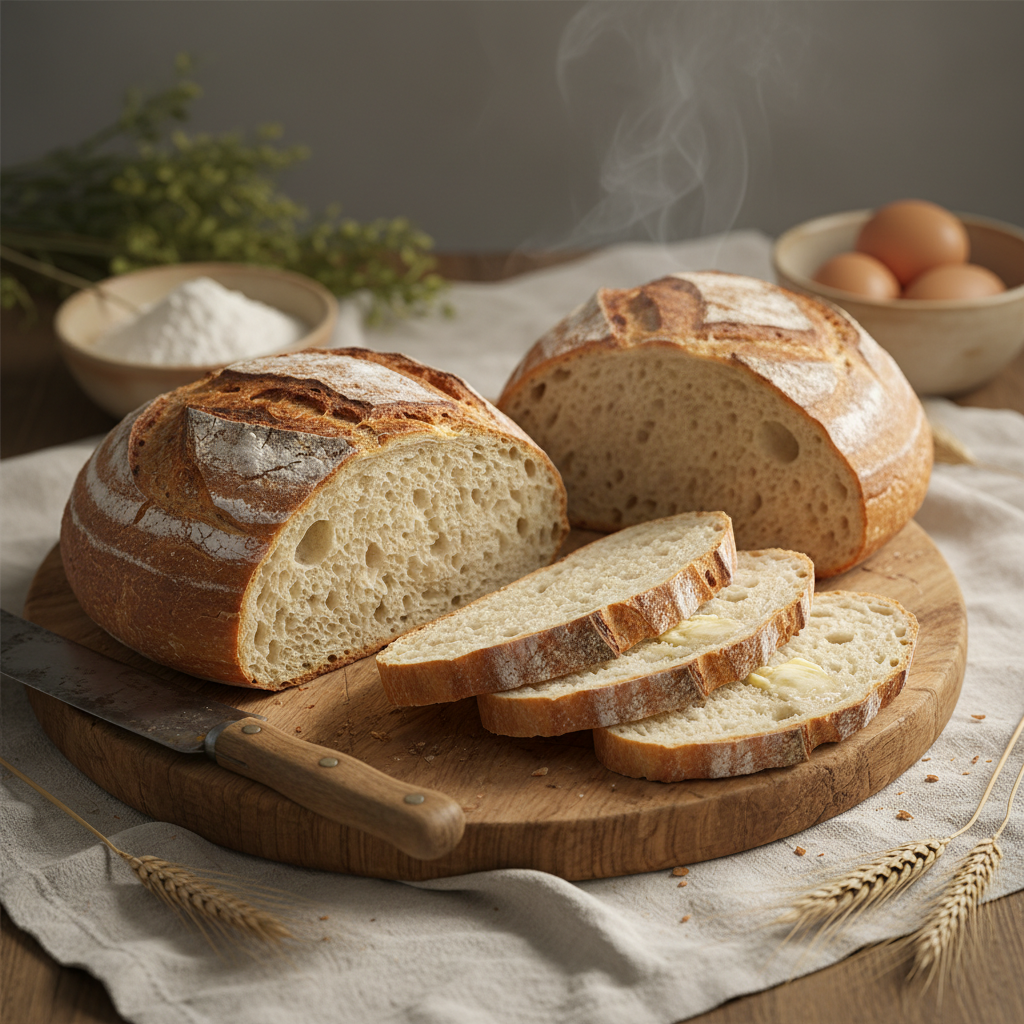
The Art of Baking Two Large Loaves: A Comprehensive Guide
There is something inherently satisfying about the aroma of freshly baked bread filling your home. It’s a primal comfort, a promise of warmth and sustenance. While many recipes cater to single loaves, often leaving you wanting more, this comprehensive guide is dedicated to the ambitious home baker looking to produce two generous, crusty, and utterly delicious loaves of bread. Whether you’re feeding a hungry family, preparing for a week of sandwiches, or simply reveling in the joy of baking in quantity, this recipe is designed to deliver consistent, impressive results.
Baking two large loaves requires a slight recalibration from single-loaf baking, not just in ingredient quantities but also in understanding the dynamics of a larger dough mass, the nuances of proofing, and the critical role of oven space. This recipe focuses on a robust, everyday white bread – versatile enough for toast, sandwiches, or accompanying a hearty meal. It’s a forgiving recipe, but with attention to detail, you’ll achieve a bread that boasts a golden, crackling crust and a soft, airy crumb every single time.
Essential Ingredients and Their Roles
The beauty of bread lies in its simplicity, yet each ingredient plays a crucial role in the final product. For two large loaves, precision in measurement is your best friend. While volume measurements can be used, weighing your ingredients, especially flour, will yield far more consistent results.
Strong White Bread Flour (approx. 1200g): This is the backbone of our bread. Strong white bread flour has a higher protein content (typically 12-14%) compared to all-purpose flour. This higher protein develops into gluten more effectively, giving the bread its structure, chewiness, and ability to hold its shape during proofing and baking. Don’t skimp on quality here; a good bread flour makes a noticeable difference.
Warm Water (approx. 780-840ml): Water hydrates the flour, allowing gluten to form, and activates the yeast. The temperature is critical: too cold, and the yeast will be sluggish; too hot, and it can kill the yeast. Aim for lukewarm, around 38-43°C (100-110°F). The exact amount can vary slightly depending on your flour’s absorption rate and ambient humidity. Start with the lower end and add more if the dough feels too dry.
Active Dry Yeast or Instant Yeast (14g or 2 sachets): This is our leavening agent. Yeast consumes sugars in the flour and produces carbon dioxide, which creates the air pockets that give bread its light texture. Instant yeast can be mixed directly with the dry ingredients, while active dry yeast usually needs to be proofed first in warm water with a pinch of sugar. For two large loaves, this amount ensures a good rise.
Fine Sea Salt (24g): More than just a flavoring, salt is essential for controlling yeast activity and strengthening the gluten structure. Without salt, bread can taste bland and have an overly porous, weak structure. Use a good quality fine sea salt for even distribution.
Granulated Sugar (20g, optional but recommended): A small amount of sugar acts as “fast food” for the yeast, helping to kickstart its activity and contributing to a beautiful golden-brown crust. It’s not strictly necessary, but it certainly enhances the flavor and appearance.
Olive Oil or Butter (2 tablespoons, optional): Adding a small amount of fat can make the crumb softer and improve the keeping qualities of the bread. It also adds a subtle richness. If you’re aiming for a very lean, rustic loaf, you can omit it.
The Method: From Dough to Golden Loaves
Baking bread is a journey, and each step contributes to the final masterpiece. Be patient and enjoy the process.
Step 1: Activating the Yeast (if using active dry)
If you’re using active dry yeast, combine the warm water (around 1 cup) with the sugar (if using) and sprinkle the yeast over the surface. Let it sit for 5-10 minutes until it becomes foamy. This indicates the yeast is active and ready to work. If it doesn’t foam, your yeast might be old or the water temperature was off; it’s best to start again.
Step 2: Mixing the Dough
In a very large mixing bowl (or the bowl of a stand mixer fitted with a dough hook), combine the flour and salt. If using instant yeast, add it directly to the flour. If using active dry yeast, add the foamy yeast mixture and the remaining warm water to the flour. If using oil or butter, add it now. Mix with a sturdy wooden spoon or the dough hook on low speed until a shaggy dough forms. It will look rough and sticky at this stage.
Step 3: Kneading for Gluten Development
This is where the magic happens. Kneading develops the gluten strands, which give bread its elasticity and structure.
By Hand: Turn the shaggy dough out onto a lightly floured surface. Knead vigorously for 10-15 minutes. Use a push-and-fold motion, stretching the dough away from you and then folding it back. You’ll feel the dough transform from sticky and shaggy to smooth, elastic, and pliable. It should spring back when gently poked.
By Stand Mixer: Knead on medium-low speed for 8-10 minutes. The dough should gather around the hook and pull away from the sides of the bowl. Perform the “windowpane test”: tear off a small piece of dough and gently stretch it. If you can stretch it thin enough to see light through it without tearing, your gluten is well-developed.
Step 4: First Rise (Bulk Fermentation)
Lightly grease a very large clean bowl with a little oil. Place the kneaded dough in the bowl, turning it once to coat the top. Cover the bowl tightly with plastic wrap or a damp kitchen towel. Let it rise in a warm, draft-free place for 1 to 1.5 hours, or until it has doubled in size. The exact time will depend on the ambient temperature. A good indicator is when you gently poke the dough with a floured finger, and the indentation remains.
Step 5: Dividing and Shaping the Loaves
Once the dough has doubled, gently turn it out onto a lightly floured surface. Avoid punching out all the air; you want to maintain some of the gas created during the first rise. Divide the dough into two equal portions. For precision, you can use a kitchen scale to ensure each loaf is the same weight (approx. 1kg each).
Shape each portion into a tight loaf. There are various shaping techniques, but a common one for pan loaves is to flatten the dough into a rectangle, fold the top third down, then the bottom third up, and finally roll it tightly into a log, pinching the seam closed. Place each shaped loaf seam-side down into two greased 9×5-inch loaf pans. If you don’t have two pans, you can shape one as a free-form boule on a baking sheet, though the pan offers more consistent support for a large loaf.
Step 6: Second Rise (Proofing)
Cover the loaf pans loosely with plastic wrap or a damp kitchen towel. Let them rise again in a warm, draft-free place for 45-60 minutes, or until the dough has risen about 1-2 inches above the rim of the pans and feels light and airy. The “poke test” applies here too: an indentation should slowly spring back.
Step 7: Preheating the Oven and Baking
About 20-30 minutes before the end of the second rise, preheat your oven to 200°C (400°F). If you have a baking stone or steel, place it in the oven during preheating for a crispier crust.
Just before baking, you can score the tops of the loaves with a sharp knife or a bread lame. This not only looks professional but also allows the bread to expand without tearing randomly. A simple slash down the middle or two diagonal slashes work well.
Place the two loaf pans in the preheated oven. If your oven is wide enough, place them side-by-side to ensure even heat distribution. If not, you might need to rotate them halfway through baking.
Bake for 30-40 minutes. The bread is done when it’s deeply golden brown on top and sounds hollow when tapped on the bottom. An instant-read thermometer inserted into the center of the loaf should read between 93-99°C (200-210°F).
Step 8: Cooling
Immediately remove the loaves from their pans and transfer them to a wire rack to cool completely. This is a crucial step! Cooling on a rack prevents the bottom from becoming soggy, and it allows the internal structure of the bread to set properly. Resist the urge to slice into the hot bread; it will still be cooking internally. Patience will reward you with the best texture and flavor. Allow at least an hour, preferably two, before slicing.
Tips for Success and Troubleshooting
- Humidity Matters: On humid days, you might need slightly less water; on dry days, slightly more. Adjust as needed until the dough feels pliable but not overly sticky.
- Oven Temperature Consistency: Ovens can vary. Consider investing in an oven thermometer to ensure your oven is truly at the temperature you set.
- Don’t Rush the Rise: Rushing the proofing stages can lead to dense, underdeveloped bread. Let the dough take its time.
- Steam for Crust: For an extra-crispy crust, you can create steam in your oven. Place a pan of hot water on the bottom rack during the first 10-15 minutes of baking.
- Storage: Once cooled, store your loaves in an airtight container or bread bag at room temperature for 3-4 days. For longer storage, slice and freeze. Toasting from frozen works wonderfully.
- Experiment with Flours: While strong white bread flour is recommended, feel free to experiment with a small percentage of whole wheat or rye flour for added flavor and nutrition once you’re comfortable with the basic recipe.
- Cleanliness: Always work with clean hands and equipment to prevent unwanted bacteria from affecting your yeast.
Baking two large loaves of bread is a rewarding endeavor. It fills your home with an incredible aroma and your pantry with delicious, homemade goodness. With this detailed guide, you’re well-equipped to master the art of baking in quantity, impressing yourself and everyone lucky enough to share in your culinary creation. Happy baking!
Este conteúdo é publicado no BrasilMaravilhoso.com, site especializado em receitas culinárias práticas e confiáveis, com foco na culinária brasileira.
As receitas são desenvolvidas e revisadas pela Chef Letícia Mantoneli, que preza pela clareza no preparo, seleção cuidadosa dos ingredientes e resultados que funcionam no dia a dia. Todo o conteúdo é criado com atenção à qualidade, originalidade e boa experiência do leitor.
O BrasilMaravilhoso.com segue boas práticas editoriais, priorizando informações corretas, linguagem acessível e transparência, oferecendo conteúdos gastronômicos seguros e úteis para todos os públicos.
